Booking choice: The Wave Rock coach day tour, from $188 per person. Check dates Tour details
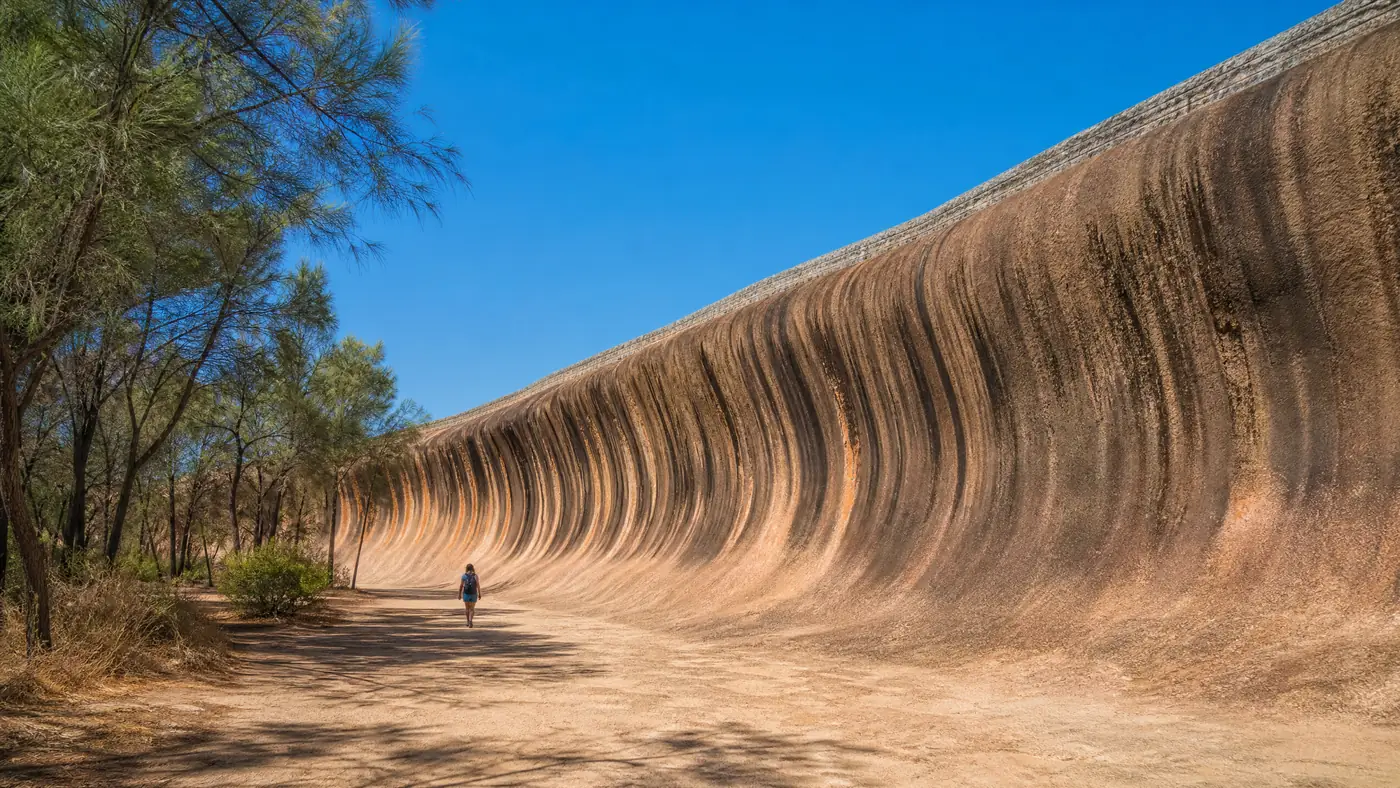
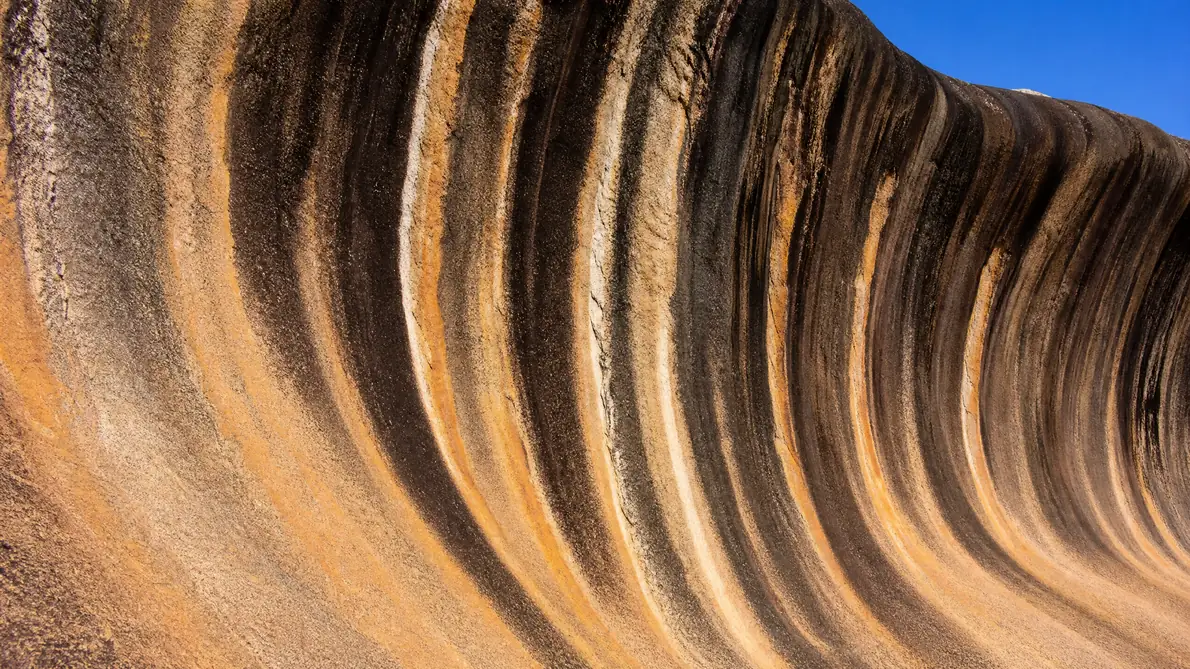
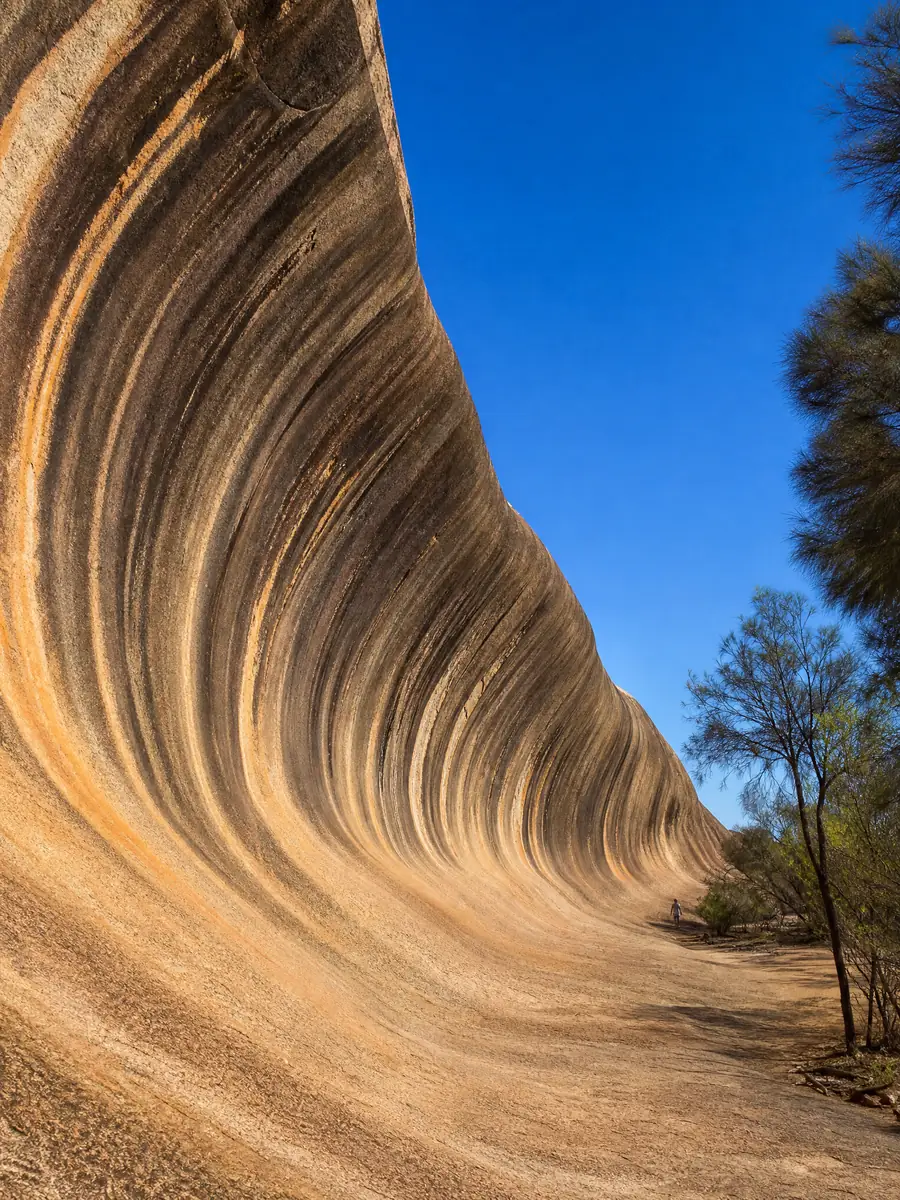
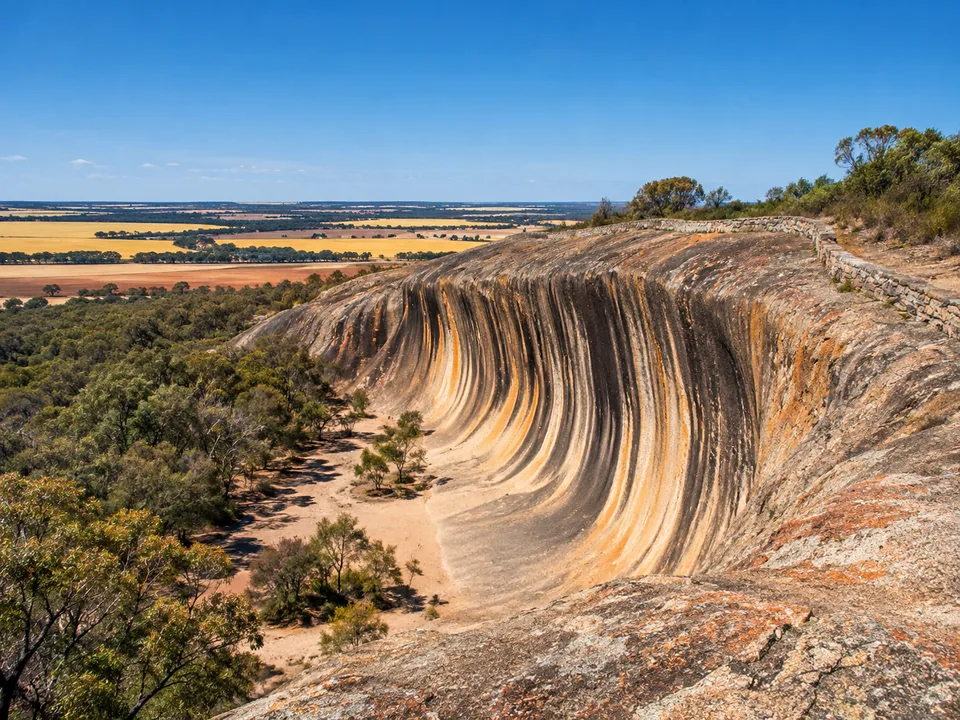
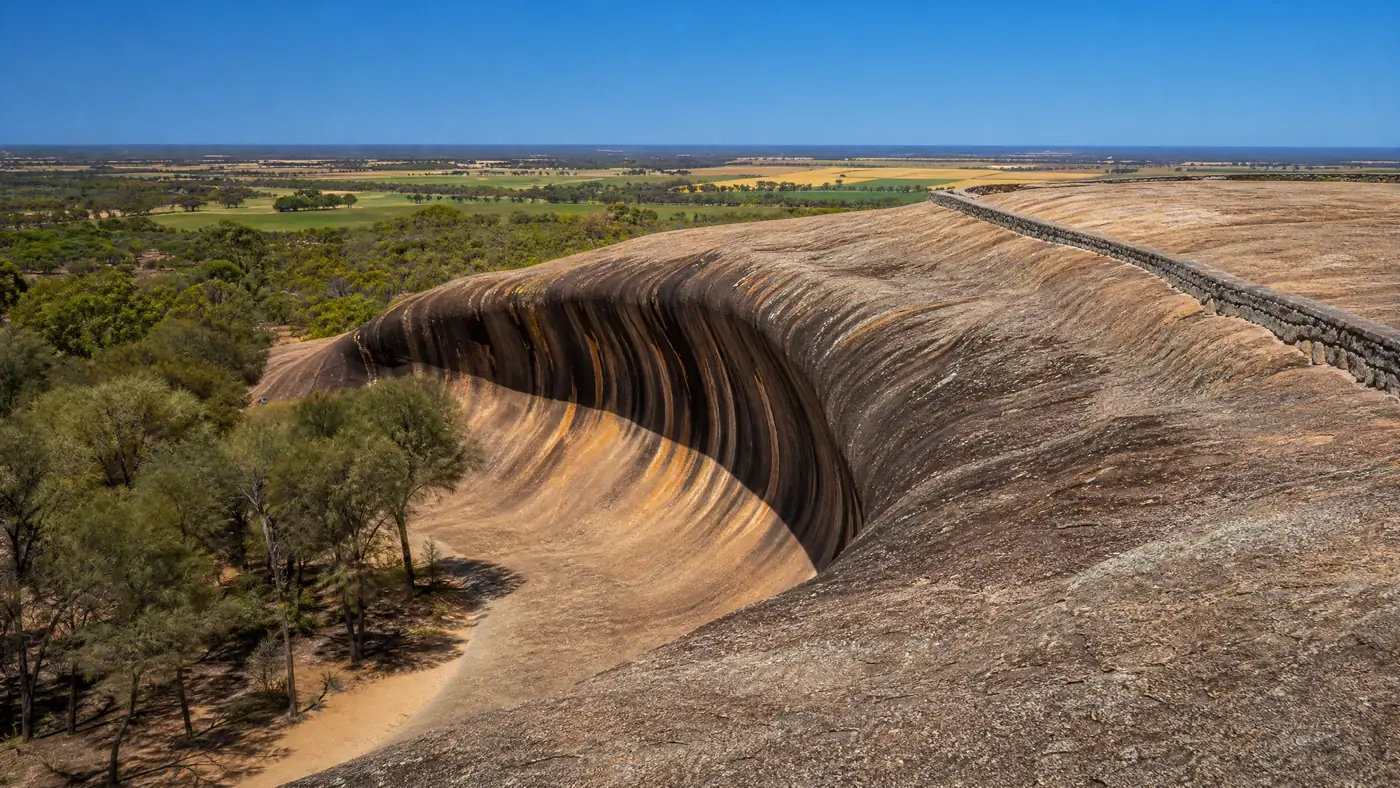
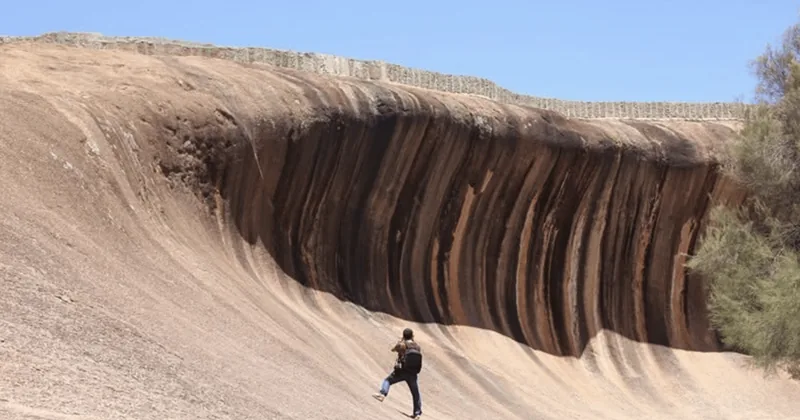
Wave Rock is the north face of Hyden Rock, a granite hill that rises out of the flat Wheatbelt just east of the town of Hyden. It looks like a frozen wave, about 15 m high and about 110 m long, and it is one of the textbook examples of a landform geologists call a flared slope.
Here is what the rock is made of, how old it is, how it got its shape and stripes, the story told about it, and who looks after it today.
The quick answer
Wave Rock is granite, about 2.7 billion years old by the Shire of Kondinin's figure. The wave shape formed underground: groundwater weathered the granite at the base of the hill, and later erosion stripped the loose rock away and exposed the curve. The stripes come from water washing minerals down the face. The Ballardong Noongar people call it Katter Kich, and the reserve is vested in the Shire of Kondinin.
How old is Wave Rock?
About 2.7 billion years old, says the Shire of Kondinin. Wikipedia's geology section puts the granite at 2.63 billion years.
It is old even by Australian standards. The granite cooled from molten rock deep underground long before there was any life on land. Wave Rock Management says "more than 2,700 million years", which is the same figure written a different way.
The wave shape is much younger. Wikipedia dates the underground weathering that shaped it to the Cretaceous, about 100 to 130 million years ago, so the rock is ancient and the curl is recent by comparison.
What kind of rock is Wave Rock?
Granite: specifically a biotite K-feldspar porphyritic monzogranite, part of the Yilgarn Craton of Western Australia.
In plain words, it is a coarse granite with large crystals of feldspar set among smaller grains of quartz and dark mica. The Yilgarn Craton is a huge block of ancient crust that underlies much of inland Western Australia. Hyden Rock is an inselberg, an isolated hill rising from a plain, and Wikipedia describes it as three domes, with the western and central domes split by a deep valley that now holds a reservoir.
Granite outcrops like this are scattered across the Wheatbelt. If you want another closer to Perth, the Sullivan Rock sunset hike climbs a granite dome about an hour from the city.
Hear the geology and the Aboriginal stories from a guide on the coach day to Wave Rock, with free cancellation up to 24 hours before.
Check dates for the Wave Rock coach day tourHow was Wave Rock formed?
It is a flared slope: groundwater weathered the granite at the base of the hill underground, then erosion removed the loose rock and exposed the curve.
Picture the hill buried in soil. Water collected where the soil met the rock and slowly rotted the granite there, chemically, into crumbly material. The rock above stayed solid. Much later, after Australia split from Antarctica and the land tilted, erosion stripped away the soil and the rotted rock, and the hollowed base was left as an overhang.
Geomorphologist C. R. Twidale wrote the classic paper on this in 1968, "Origin of Wave Rock, Hyden", and his work is still the reference for how flared slopes form. It is one reason Wave Rock turns up in textbooks.
Why does Wave Rock have stripes?
Water running down the face dissolves minerals in the granite and redeposits them, leaving streaks of red, orange, grey and black.
Encyclopaedia Britannica describes it this way: as rain washes down the granite, it dissolves minerals and leaves them behind as colourful bands. The streaks run vertically because that is the way the water flows.
The colours have changed in living memory. Local Noongar guide Michael Ward has said the wall was once a lighter yellow or cream, and Wikipedia links the change to the wall on top of the rock, which altered how water runs off. Low sun brings the stripes out best, so early morning and late afternoon are the times to photograph them.
What is the wall above Wave Rock?
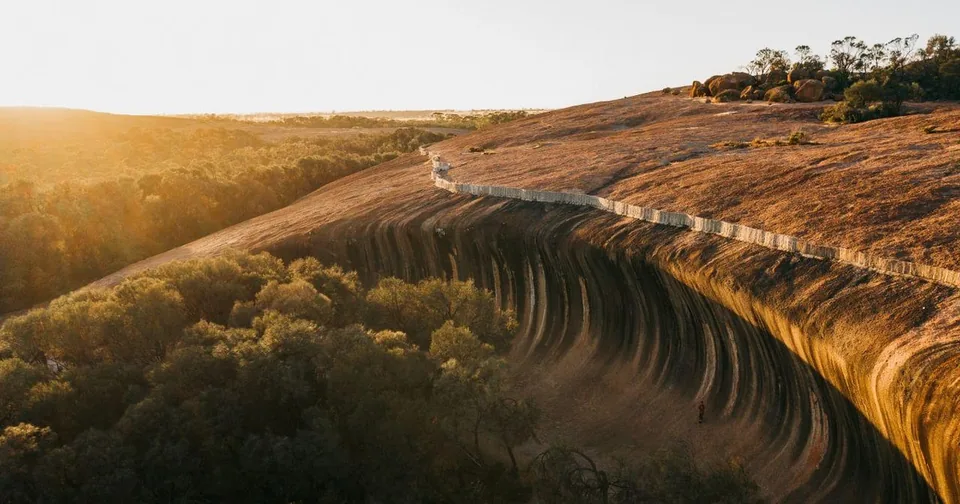
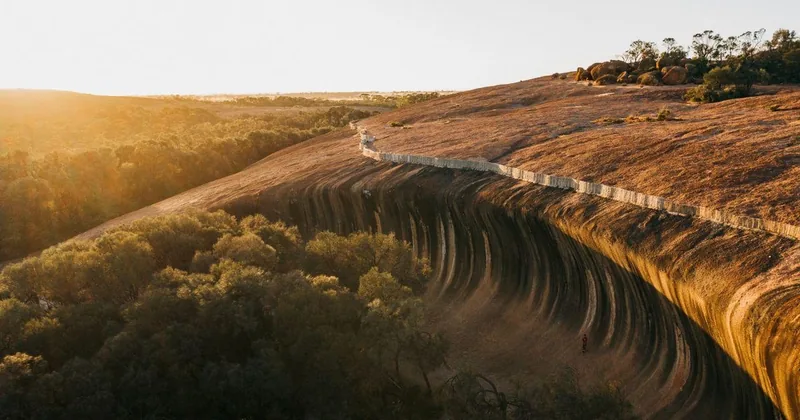
A low stone wall built in December 1928 by the Public Works Department to catch rainwater for local settlers. It funnels runoff into a storage dam.
The wall runs halfway up Hyden Rock, above the wave, following the contour. It was built for the settlers of the East Karlgarin District and renovated in 1951 to supply more water to Hyden township. Similar walls are common on granite rocks across the Wheatbelt, where water was the hardest thing to come by.
You can walk beside it on the Hyden Rock Walk. Because the rock is still a water catchment, dogs are not allowed up there. The walk details are in our entry fee and walks guide.
Walk under the wave and up beside the 1928 wall, then on to Mulka's Cave, with lunch, entry fees and commentary included.
Explore the Wave Rock coach day tour Tour detailsWhat is the Aboriginal story of Wave Rock?
The Ballardong Noongar people call the rock Katter Kich. In the local story, the Rainbow Serpent shaped it by dragging her swollen body across the land after drinking all the water.
Wikipedia records this belief and describes the site as an icon of cultural learning, with a moral from the Dreaming to be remembered for life. Wave Rock is part of a dreaming trail that runs from the south coast near Augusta north-east towards the Great Victoria Desert. Other places on it include Mulka's Cave, Puntapin Rock, Jilakin Rock, Jitarning Rock and Dumbleyung Lake.
"Wave Rock & Environs" has been on the Aboriginal Heritage Sites Register since 21 August 1995. Treat the rock as the significant place it is. In November 2023, Ballardong elder Farley Garlett criticised drinking on the rock during the Wave Rock Weekender festival, as the National Indigenous Times and the ABC reported. The festival, held each spring since 2006, announced its 2026 edition as its final one.
Why is Wave Rock famous?
Because of its shape: a granite cliff that looks exactly like a breaking wave, and one of the best examples of a flared slope anywhere.
It is one of Western Australia's best-known natural landmarks, and the Shire of Kondinin's improvement plan counts about 140,000 visitors a year. It even made an album cover, the Japanese band T-Square's "Truth" from 1987. The most famous rock in Australia is still Uluru in the Northern Territory, but Wave Rock is the one people in Perth drive four hours to see.
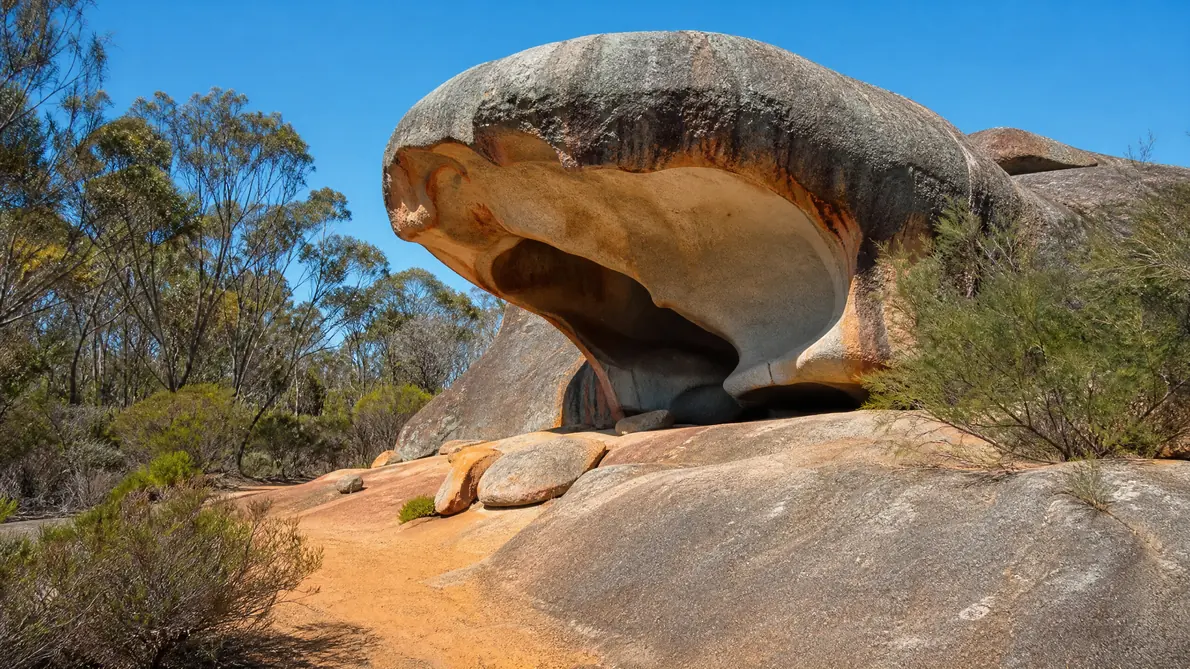
Its fame rests on the shape, though most visitors leave talking about the whole day: the stencils at Mulka's Cave, Hippo's Yawn and the Wheatbelt itself. Guests on the coach tour often mention how much the guide explains along the way.
Who owns Wave Rock?
The Wave Rock reserves are vested in the Shire of Kondinin, which manages them and collects the entry fee. Part of a nearby reserve is leased to the Water Corporation.
The Shire's Wave Rock Improvement Plan 2022-2025 lists Reserve 2883 (Wave Rock) and Reserve 28832 as vested in the Shire, with the wildlife park, Wildflower Shoppe and caravan park held on separate leases. Part of Reserve 19929 is vested in the Minister for Water Resources and leased to the Water Corporation. The resort, caravan park, kiosk and the waverock.com.au visitor site are run by Wave Rock Management.
The A$15 per vehicle entry goes to the Shire for the upkeep of the reserve.
See the 2.7 billion-year-old wave for yourself: fly from Jandakot at 7:30am and be back in Perth by noon.
Check dates for the Wave Rock scenic flightFrequently asked questions
How old is Wave Rock?
About 2.7 billion years, according to the Shire of Kondinin. The wave shape itself formed much later, through weathering about 100 to 130 million years ago.
What is Wave Rock made of?
Granite, a biotite K-feldspar porphyritic monzogranite of the Yilgarn Craton. It is the north face of Hyden Rock.
What is the Aboriginal name for Wave Rock?
The Ballardong Noongar people call it Katter Kich. In the local story it was shaped by the Rainbow Serpent.
How big is Wave Rock?
About 15 m high and about 110 m long. The Shire of Kondinin gives 100 m, and Wave Rock Management more than 100 m.
Ready to book
Choose your tour
Free cancellation up to 24 hours before on every option. Prices are from-prices in USD and move with the season.
Wave Rock, York & Aboriginal Culture Day Tour
- Coach from selected Perth CBD hotels and back
- Country-style lunch at the Wildflower Shoppe in Hyden
- Entry to Wave Rock, Hippo's Yawn and Mulka's Cave
Wave Rock Scenic Flight & Ground Tour
- Scenic flight from Jandakot Airport to Wave Rock and back
- Guided ground tour of Wave Rock and Hippo's Yawn
- Time for the wildlife park or the Toy Museum